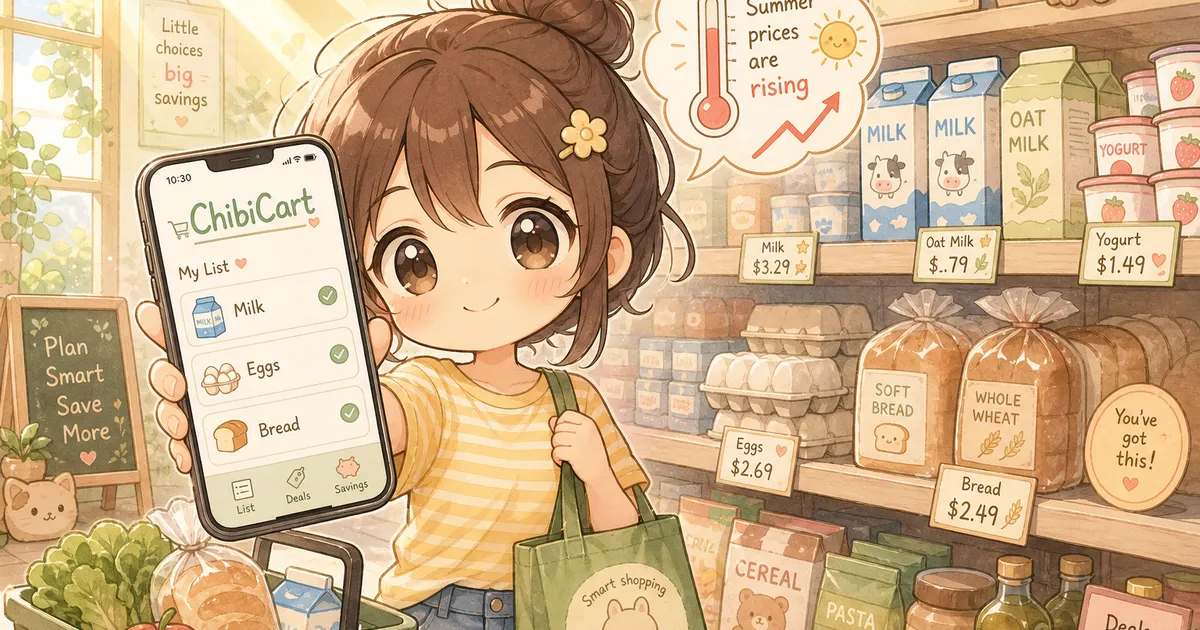
Summer Grocery Prices 2026 Are About to Spike — Here's How a List Helps 🛒
You’re standing in the cereal aisle, holding the box you’ve bought every week for two years. The shelf tag says it costs $2 more than last Tuesday. You blink. You check again. Same number. 😶
This is going to keep happening. Industry analysts at Supermarket News warned on May 11 that summer grocery prices 2026 are set to spike — driven by Iran tensions pushing fuel and fertilizer costs higher, with a Senate hearing on the way. Translation: the receipt you got in April is not the receipt you’re going to get in July.
You can’t control oil markets. But you can control what lands in your cart. A well-built shopping list is the cheapest defense you have, and it works exactly when prices stop being predictable.
Why Summer Grocery Prices 2026 Are Climbing
Here’s the short version, in plain English.
Fuel costs ripple through everything. Trucks deliver food. Tractors plant it. Refrigeration runs on energy. When fuel prices climb, every box on every shelf gets a little heavier on your wallet.
Fertilizer is tied to natural gas. Most synthetic fertilizer comes from a process that needs natural gas as a feedstock. Geopolitical tension in oil-producing regions pushes that input cost up — and that lands in produce prices a few months later.
Summer demand peaks just as supply tightens. Cookouts, vacation rentals, kids home from school. More meals at home means more grocery runs at exactly the wrong time.
So the question isn’t will your bill go up. It’s how do you stop the damage from compounding?
How Does a Shopping List Actually Save You Money?
A list saves money by removing the three most expensive shopping behaviors: forgetting, drifting, and impulse-grabbing.
Forgetting costs you a second trip — and a second trip is where 30-40% of your monthly grocery overspend lives. You went for milk. You came home with milk and $47 of other things you remembered halfway down aisle 4.
Drifting is what happens when you walk in without a plan. The store’s job is to slow you down and surface high-margin items at eye level. Without a list, you’re playing their game on their turf.
Impulse-grabbing is the cousin of drifting. The end-cap promo. The new flavor. The thing your kid spotted. Each one is small. Together they’re 15% of an average household’s grocery bill.
A list neutralizes all three. You shop the list. You leave. That’s the whole strategy.
Three Tactics for Spike-Proof Shopping This Summer
A generic list helps. A list built for price volatility helps more. Here are three concrete moves you can make this week.
1. Pre-Shop the Prices Before You Leave Home
Most grocery stores publish weekly flyers online by Sunday night. Spend five minutes scanning yours before you build the list.
When you add an item to ChibiCart, drop the current shelf price into the item note. Eggs ($4.29). Ground beef ($6.99/lb). When you’re back in the store and the price has moved, you’ll see the change immediately — not on the receipt three days later.
This turns your list into a lightweight price tracker. After two or three weeks, you start to spot which categories are spiking fastest and which are holding steady.
2. Capture Brand Swaps in the Item Note
When the brand you usually buy jumps 20%, the store-brand version often hasn’t moved as much. The problem is remembering which swaps actually worked.
In your list, when you make a swap that tasted fine, note it on the item. “Try Kirkland version next time.” “Store brand pasta — same as Barilla.” Your list becomes the memory you don’t have to keep in your head.
Three weeks of swaps and you’ve quietly rebuilt your default cart at a price that holds even when name brands keep climbing.
3. Stick to the List When the Shelf Tag Has Moved
This is the discipline part, and it’s the hardest one.
When the shelf price has jumped, your brain wants to do one of two things: buy two now (“I’ll lock in the price!”) or abandon the item entirely and grab something fancier nearby. Both are reactions, not decisions.
The rule: if it’s on the list, you buy it. If it’s not, you don’t. Spikes are noise. The list is signal. Trust the list you built when you weren’t standing under fluorescent lights with a hungry toddler. 👶
What Makes a List “Spike-Proof”?
A spike-proof list has four things most lists don’t:
- Last-known prices in item notes, so you can see when something has moved
- Swap memory — which store brands you’ve already vetted
- Categories grouped so you don’t double back through aisles (and re-tempt yourself)
- Shared with whoever else shops so you don’t double-buy when prices are already high
That last one is where shared lists save real money. When ChibiCart syncs your list across phones in real-time, your partner adds milk while you’re already at the store — and you see it before checkout. No duplicate gallon. No “I thought you were getting it.” Just one cart, one bill, one trip.
The Cozy Part: Why This Doesn’t Have to Feel Grim
Here’s what we’ve noticed: people who build careful lists during a price spike season don’t just save money. They stop dreading grocery day.
The anxiety of grocery shopping right now isn’t really about the prices. It’s about the uncertainty. You don’t know what the bill is going to be until you’re at the register, and that not-knowing is exhausting.
A list with prices and swaps takes the surprise out. You walk in with a plan. You walk out with what you came for. The trip becomes 20 minutes instead of 50, and your cart matches your plan instead of your panic.
That’s the whole pitch for ChibiCart: a shopping list that’s actually delightful to use, syncs across your household, works offline in dead-zone aisles, and remembers the things your brain doesn’t want to. Especially this summer.
Start Your Spike-Proof List This Week
You don’t need to overhaul anything. Just three steps:
- Build this week’s list with prices in the notes. Five minutes on Sunday.
- Share the list with whoever else shops in your home.
- At the store: shop the list, note the swaps, leave.
Do that for three weeks. Compare the receipts to April. We’d bet a bag of groceries you’ll see the difference. 🛍️
Summer 2026 is going to be a weird stretch at the store. A good list won’t fix the markets — but it will keep your cart honest while everyone else is winging it. And that’s enough.