How to Remember Your Favorite Brand on Your Grocery List When the Shelf Keeps Changing
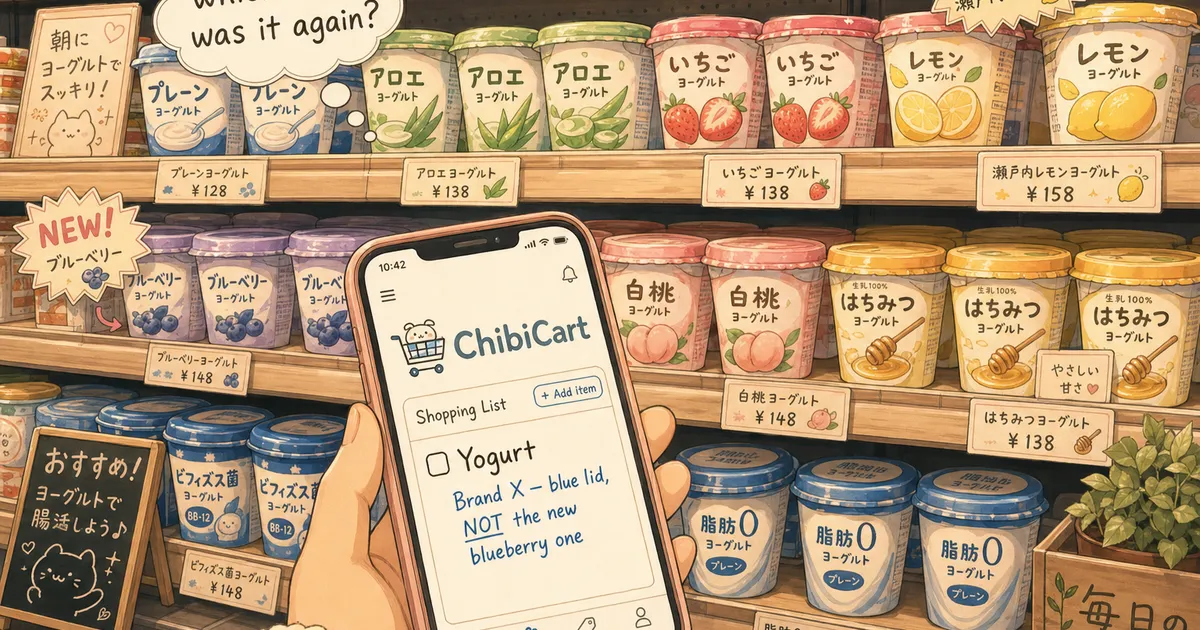
You’re standing in front of the yogurt section. Last month there were maybe twelve options. This month there are eighteen, and three of the ones you liked have been moved, rebranded, or replaced. Your partner’s voice is in your head — the blue lid one, not the green one — but the blue lid one is gone, and there are now two new blue lid ones, neither of which is the one you actually wanted.
This is the new shelf. On May 20, 2026, Target told investors it plans to accelerate newness in food and beverage by 50% in Q2 — a strong signal that the rest of the industry is leaning even harder into product churn. Yogurt, oat milk, crackers, frozen meals, snack bars: all of it is shuffling faster than your memory can keep up. The result isn’t a budget problem. It’s a recognition problem.
You already chose the brand you like. You shouldn’t have to keep re-choosing it every Saturday morning.
Why You Need to Remember Your Favorite Brand on Your Grocery List Now
Newness in the grocery aisle used to drift in slowly — a handful of new SKUs per quarter per category. With a 50% acceleration in newness from one of the largest U.S. retailers, expect that drift to feel more like a tide. Lookalike packaging, near-identical names, and seasonal rebrands mean the brand you decided on six weeks ago can be hard to find without a cue.
The friction shows up in three predictable places:
- You forget which one you actually liked, especially when it’s the third item your partner asked for and you’re already past the dairy case.
- You and your partner remember different details. You remember the lid color. They remember the price. Neither of you remembers the brand name.
- You buy something that looks right and isn’t. Then it sits in the fridge. Then nobody eats it. Then you buy a third one next week.
The fix isn’t a better memory. It’s putting the memory on the list, where both shoppers can see it in the aisle.
What Does It Mean to Put Brand Memory on a Grocery List?
Direct answer: a brand-memory note is a one-line cue attached to a list item that helps any shopper in your household pick the exact product you previously agreed on, even when the shelf has changed around it. It lives on the item itself, not in a group text or a vague memory.
The note doesn’t need to be a full brand name. It just needs to be the smallest cue that points to the right product. Some examples that actually work:
- Yogurt — Brand X, plain whole milk, blue lid (NOT the new blueberry one).
- Oat milk — Brand Y, the unsweetened barista one in the gray carton.
- Crackers — Brand Z, the original, NOT the new “sea salt & herb” version.
- Coffee — Brand A medium roast, the gold bag (skip the new “smooth blend”).
- Pasta sauce — Brand B basil, NOT the new garden style.
Notice the pattern: a brand cue (Brand X), a variant cue (whole milk, unsweetened, original), and at least one negative cue (NOT the new one). That third part matters. Newness is what’s confusing the aisle in the first place — naming what to skip is half the work.
How to Set Up Brand-Memory Notes Without Overengineering It
You don’t need a spreadsheet. You don’t need to convert your household into a procurement department. You need maybe ten minutes once, then thirty seconds of upkeep when something changes.
- Open your shared list in ChibiCart — or wherever your household keeps the master grocery list.
- Pick the categories that churn the most. For most households that’s yogurt, oat milk, plant-based dairy, snack bars, frozen meals, and cereal. Skip categories where you don’t care which brand you get (canned tomatoes, table salt, basic bread flour).
- Add a one-line note to each of those items. Brand + variant + one negative cue. Keep it under twelve words.
- Update the note when the brand changes the product. If “the blue lid one” is now green, edit the note the same week, not next month.
- Let your partner edit too. A shared list with notes is only as accurate as the most recent shopping trip. Whoever shopped last has the freshest information.
That’s the whole system. The list does the remembering. You do the shopping. Nobody is the household’s brand archivist.
How Do You Keep Notes Useful When the Shelf Keeps Changing?
Brand memory rots fast in 2026. A note written in March might point to a SKU that’s already been quietly discontinued by May. Three habits keep the list trustworthy:
- Add notes the moment you put groceries away, not later. Voice input helps here — open the list, tap the item, dictate the cue while you’re still holding the carton. In ChibiCart you can do this hands-free with voice input, which matters when your hands are full of cold yogurt cups.
- Use negative cues, not just positive ones. “Brand Y oat milk” is fine. “Brand Y oat milk — NOT the new barista smooth” is better, because the new one is the one most likely to fool the next shopper.
- Trust the list over the receipt. If the wrong thing came home, don’t relitigate it. Edit the note so it’s clearer next time, and move on. The list is a living document, not a verdict.
The goal isn’t perfect notes. The goal is notes that survive one Q2 reshuffle and still point to the right product on the other side.
A Note on Sharing Without Sync Anxiety
Grocery stores have a talent for being signal dead zones, especially the dairy and frozen aisles in the back. A list with brand-memory notes has to actually load in those aisles or the whole exercise falls apart.
ChibiCart works offline as a PWA — the list and every note on it live on your phone before you walk in. You can tap into the yogurt item in the back of the store, read “Brand X, blue lid, NOT blueberry,” and check it off without a single bar of signal. Whatever you edit syncs the moment you’re back in range, which means your partner sees the updated note before their next trip.
This is the difference between a list that’s helpful in theory and a list that’s helpful in the aisle.
The Quiet Win
The shelves are going to keep churning. Target’s 50% newness acceleration is one signal; the rest of the industry is moving the same direction. You can either re-decide every favorite brand every week, or you can put the decisions you already made onto the list, where both you and your partner can find them.
A shopping list with brand-memory notes per item is the smallest possible upgrade with the biggest payoff: fewer wrong items in the cart, fewer texts from the aisle, fewer half-eaten yogurts in the back of the fridge.
If this Q2’s reshuffle has you squinting at the dairy case longer than you used to, you don’t need a better memory. You need a list that remembers for you. Try ChibiCart — it’s free, it works offline, and the notes you put on each item will quietly outlast the next three rebrands. 🛒