Mid-May Produce Shopping List: What's Actually Peak in the Best Two Weeks of Spring
You walk into the produce section on a Saturday morning in mid-May and there it is — pencil-thin asparagus stacked in green pyramids, strawberries actually smelling like strawberries, and snap peas crunching just from being looked at. Two weeks from now, half of these will be gone or doubled in price. 🍓
Mid-May is the shortest, sweetest window of the spring produce calendar. Five or six crops peak at the same time, and most of them have a 2-3 week shelf life on the shelves themselves. If you don’t catch them now, you wait a year.
This is the mid-May produce shopping list that’s actually worth writing down — not what’s available, but what’s peak — plus how to plan the trip so nothing wilts in the fridge before you cook it.
What Produce Is Actually Peak in Mid-May?
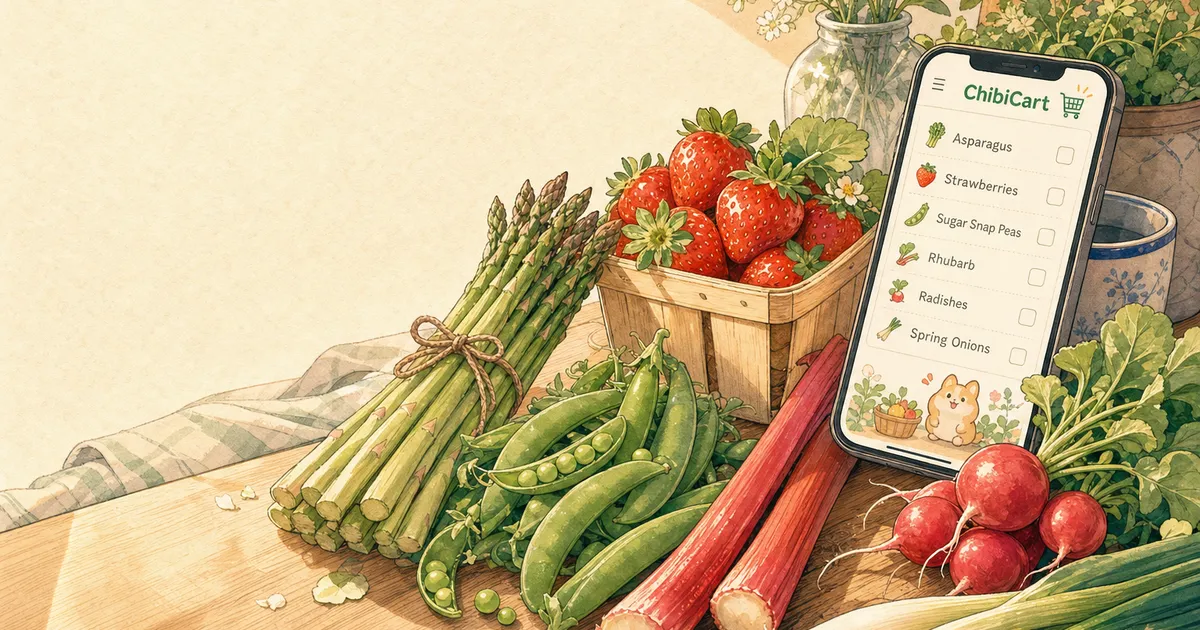
Here’s the short answer for anyone scanning: in mid-May (roughly May 10 through May 25 in most of the US), six crops hit peak season together — asparagus, strawberries, sugar snap peas, rhubarb, radishes, and spring onions. Each has a narrow window before either flavor fades or supply drops.
The specifics:
- Asparagus — peak April through June, but mid-May spears are the most tender. Look for tight, dry tips and stalks that snap when bent.
- Strawberries — local berries hit peak mid-May to mid-June in the mid-Atlantic and Northeast, slightly earlier in California and the South. Smell them before buying — peak strawberries are unmistakable.
- Sugar snap peas — May is the peak month. After early June, they get starchy fast.
- Rhubarb — May through June. Look for firm, glossy stalks; avoid limp or pale ones.
- Radishes — spring radishes peak now, before the heat turns them woody and sharp.
- Spring onions — the green-topped, small-bulb kind. Sweeter than mature onions, only here for a few weeks.
If you’re shopping for produce that tastes like spring, this is the whole list. Everything else in the produce aisle right now is either trucked from somewhere warmer or hanging on from last week.
Why Mid-May Is the Best Two Weeks of the Year for Produce
Most months have one or two peak items. Mid-May has six — and they all overlap for about a fortnight. That’s unusual.
The reason is botanical timing. Cool-season crops (peas, asparagus, radishes, rhubarb) finish their spring run just as the first warm-season crop (strawberries) hits its earliest peak. For two weeks, the produce aisle is doing two seasons at once.
It also doesn’t last. Asparagus quality drops noticeably by early June. Local strawberries get hammered by heat. Snap peas turn to starch. Spring onions disappear into mature onions. Buy in mid-May or wait until next year. That’s not dramatic — that’s just how the calendar works.
For anyone trying to eat seasonally without obsessing over it, mid-May is the easiest win of the year. The shopping list practically writes itself.
A Mid-May Produce Shopping List That Actually Works
A peak-produce trip is different from a normal grocery run. You’re buying for flavor, not for the week ahead. Half of these items don’t survive five days in the fridge — so the list needs a rough cooking plan attached.
Here’s the working list, with quantities and what to do with each:
- 🥬 Asparagus — 1-2 bunches. Roast within 3 days. Snap and toss with olive oil, salt, lemon, 425°F for 12 minutes.
- 🍓 Strawberries — 1-2 pints. Eat the first pint within 48 hours. Macerate the second pint with sugar and a splash of balsamic for shortcakes or yogurt.
- 🌱 Sugar snap peas — 1 lb. Eat raw with hummus, or 90-second sauté with garlic and sesame oil.
- 🌿 Rhubarb — 2-3 stalks. Compote with strawberries and a tablespoon of sugar. Twenty minutes on the stove. Goes on everything.
- 🌶️ Radishes — 1 bunch. Slice thin onto buttered sourdough with flaky salt. Or quick-soak in rice vinegar.
- 🧅 Spring onions — 1 bunch. Grill whole, or chop the greens like scallions for any dinner this week.
That’s it. Six items. Two weeks of peak-flavor cooking with minimal planning.
How to Plan the Trip So Nothing Wilts
The single biggest waste with peak produce is buying too much and watching half of it go limp by Wednesday. Three small habits prevent this:
1. Plan two cook-now meals before you shop. Pick one meal for the night you shop and one for the day after. Asparagus night one, strawberry shortcake night two. Now you know the produce gets used.
2. Buy the most fragile stuff in smaller quantities. Strawberries and snap peas don’t keep. One pint and one half-pound, not three pints and two pounds. You can always buy more next weekend — most of these items are still peak for another 7-10 days.
3. Keep the list flexible at the bottom. Anchor the top of your list with the six peak items. Leave space for one or two surprises — a vendor with early cherries, a half-flat of strawberries on sale. Mid-May is a discovery week. Lean into it.
A shopping list app like ChibiCart makes this easy because the list can stay open on your phone while you’re at the market or store, voice input lets you add the strawberry sale you didn’t expect, and offline mode means it doesn’t matter if the farmer’s market is in a park with one bar of signal. 📱
What to Skip in Mid-May (Even If It’s on the Shelf)
The produce aisle in mid-May still has a full summer lineup — tomatoes, corn, peaches, watermelon, zucchini. None of it is peak yet. Most is greenhouse, trucked from Mexico or Florida, or held in cold storage from a different hemisphere.
If you want the best two weeks of spring produce, skip these for now:
- Tomatoes — local peak is July through September. Mid-May tomatoes are watery and pale.
- Peaches — June at the earliest in the South, July most places. May peaches are usually picked green.
- Sweet corn — local peak is July and August. Mid-May corn is from somewhere far away.
- Zucchini and summer squash — better in June. Fine in May, but not peak.
This isn’t food snobbery — it’s just that you only have six fridge shelves and twenty-five dollars in the produce budget. Spend it on what’s at its best right now.
Mid-May vs. Late-May: A Two-Week Snapshot
| Mid-May (May 10-25) | Late-May (May 25-June 5) | |
|---|---|---|
| Asparagus | Peak, tender | Still good, less tender |
| Strawberries | Just hitting peak (mid-Atlantic/Northeast) | Full peak, often on sale |
| Snap peas | Peak | Starting to fade |
| Rhubarb | Peak | Peak |
| Radishes | Peak | Heat-sensitive, getting sharper |
| Spring onions | Peak | Maturing into regular onions |
| Cherries | Not yet | Starting in California |
If you only get one peak-produce trip this season, make it the second weekend of May. If you can do two, hit the second weekend and the fourth weekend — you’ll catch the snap peas before they fade and the cherries as they start.
Save the List for Next May
The genuinely useful trick with seasonal produce: keep the list. Mid-May 2026 looks remarkably like mid-May 2027 will. The peak items don’t change. Your cooking plans for them probably won’t either.
In ChibiCart, you can save this as a recurring list and pull it up next May 10 with one tap. The roast-asparagus reminder, the strawberry-rhubarb compote note, the “buy half what you think” warning — all there, exactly where you left it. A year from now you’re not rebuilding the list. You’re just shopping. 🌱
Mid-May is twelve days long, more or less. Spend the next one of them at the produce aisle, buy the six things that are actually peak, and skip the rest. The strawberries, especially. Don’t skip the strawberries.