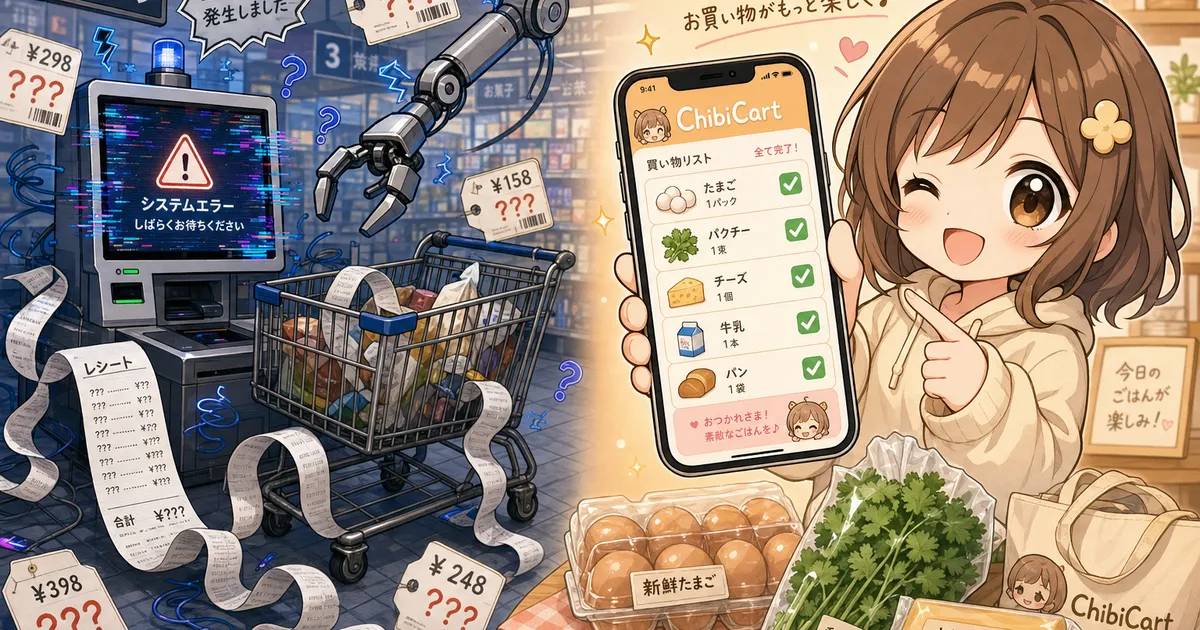
Grocery Shopping Got Complicated — Your List Shouldn't Be
You just wanted to buy eggs.
But first the self-checkout yelled at you for an “unexpected item in the bagging area.” Then the app on your phone wanted you to opt into a loyalty program before showing your list. And somewhere between aisle three and the deli counter, you got a push notification asking if you’d like an AI assistant to “optimize your basket.”
All you wanted was eggs.
When Did Grocery Shopping Get So Complicated?
Something shifted in the grocery world this year, and not in the direction shoppers were hoping for.
Self-checkout is under fire. New York City is actively debating regulations around self-checkout systems — not because the technology is new, but because customers are fed up. Machines that freeze mid-scan, unexpected weight errors, and the creeping feeling that stores replaced cashiers to save money, not to save you time.
Pricing is getting shadier. In Washington state, Albertsons is facing a lawsuit alleging that their buy-one-get-one deals overcharged customers across more than 3 million transactions over five years. When even the “deals” can’t be trusted, something’s broken.
AI wants to run your errands. Instacart rolled out an AI shopping assistant. Walmart is testing agents that build your cart for you. Meanwhile, Amazon quietly admitted that agentic AI “is not the best” for grocery shopping. Turns out, people don’t love handing their dinner plans to an algorithm.
Three different problems. One common thread: the simple act of buying groceries is being over-engineered.
The Case for Doing Less
Here’s a question worth asking: when was the last time a new grocery store feature actually made your trip easier?
Not faster for the store. Not more profitable for the brand. Easier for you.
Most of the complexity being added to grocery shopping exists to serve the business, not the shopper. Dynamic pricing algorithms optimize margins. Self-checkout cuts labor costs. AI assistants collect preference data for ad targeting.
None of that helps you remember to grab cilantro.
The most useful tool for a grocery run hasn’t changed in decades: a list. Something you can glance at, check off, and forget about when you’re done. No accounts, no algorithms, no “smart” recommendations you didn’t ask for.
What a List App Should Actually Do
If the grocery industry is racing to add complexity, a good list app should be running the other direction. Here’s what actually matters:
Work without internet. You’re in a concrete-walled warehouse store with zero bars. Your list should still be there. Not loading, not syncing, not asking you to reconnect. Just there. ChibiCart is built offline-first — your list lives on your device and doesn’t need a server to show up.
Share without friction. “Can you grab milk?” shouldn’t require downloading an app, creating an account, and accepting a shared list invitation. Real-time sharing means your partner sees the updated list the moment you add something — and it works even if one of you loses signal in the store.
Stay out of the way. No upsells. No sponsored product suggestions. No AI trying to guess what you want for dinner. A list app should open, show your list, and let you shop. That’s it.
The Simplicity Premium
There’s a reason people still write grocery lists on paper. Paper doesn’t buffer. Paper doesn’t ask for your email. Paper doesn’t push a notification about a sale you didn’t search for.
The problem with paper is that it’s not shareable, it’s not always with you, and the dog might eat it.
The sweet spot is an app that keeps what’s good about paper — instant, reliable, no-nonsense — and adds only the things that genuinely help: sharing with your household, checking things off on your phone, having your list survive a dead battery comeback because it doesn’t depend on the cloud.
That’s the approach behind ChibiCart. It’s a shopping list app that works more like a piece of paper than a piece of software. Offline by default, syncs when it can, and never tries to sell you anything.
Shopping Shouldn’t Need a User Manual
The grocery industry is going through a weird phase. Stores are adding technology faster than shoppers can keep up, regulators are starting to push back, and trust in pricing and AI is dropping.
You don’t need to care about any of that.
You need eggs, cilantro, and that one cheese your kid likes. You need a list that’s there when you pull out your phone, whether you’re in a parking lot or a basement freezer section. You need to check things off and move on with your day.
Grocery shopping got complicated. Your list doesn’t have to. 🛒