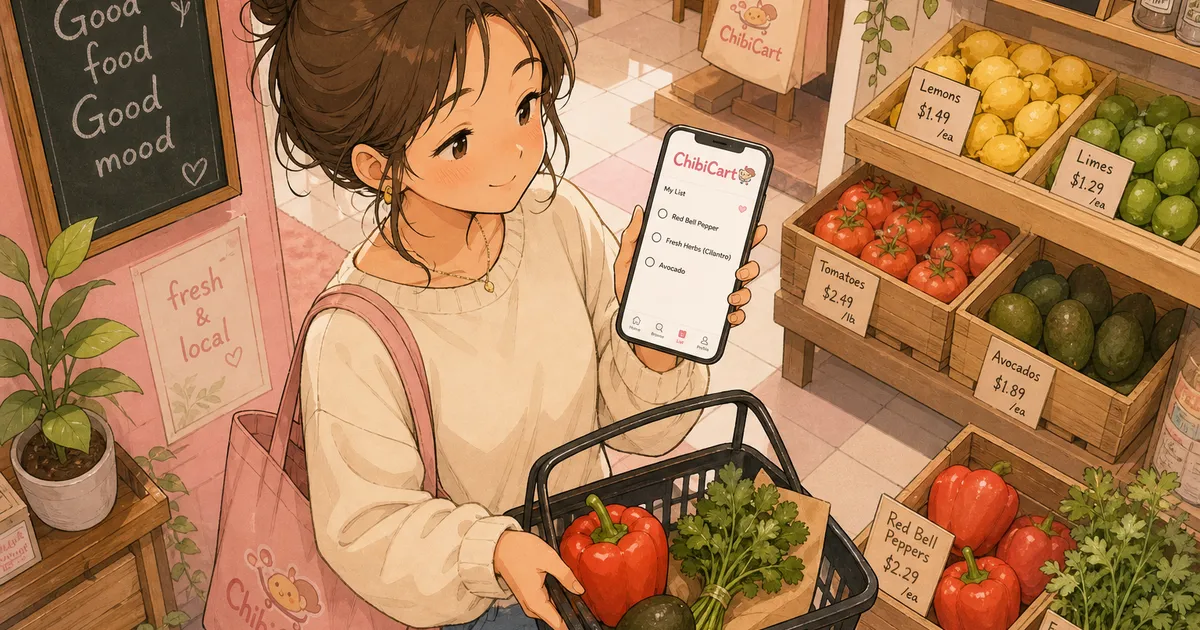
Grocery Shopping for One Doesn't Mean Shopping Alone
You’re standing in the produce section, staring at a bag of six bell peppers. You only need one. But the bag is cheaper per pepper, and maybe you’ll use them this week? (You won’t. Three will go soft in the crisper drawer by Thursday.)
This is the quiet tax of grocery shopping for one person — a world designed for households of four, where bulk is king and sharing is assumed.
Why Does Solo Grocery Shopping Feel So Wasteful?
Here’s a number that stings: single-person households throw away proportionally 40% more food than multi-person homes. It’s not because solo shoppers are careless. It’s because the entire grocery ecosystem — from packaging sizes to sale structures — is built around bigger baskets.
When household item prices hit their highest monthly increase since September (Supermarket News, May 2026), solo shoppers feel it most acutely. You can’t split a Costco haul with a partner. You can’t rotate cooking duties. Every purchase decision lands on you alone.
The friction isn’t lack of willpower. It’s lack of structure.
How Can a Grocery List for One Person Reduce Waste?
A solo shopping list isn’t just a reminder of what to buy — it’s a defense system against three specific traps:
-
The bulk discount trap. That family-size yogurt pack is 30% cheaper per unit. But if you eat two and toss four, you paid more per yogurt you actually consumed.
-
The inspiration trap. You see beautiful asparagus and imagine yourself making that recipe you saved. Without a plan attached to that asparagus, it becomes compost.
-
The “while I’m here” trap. Solo shoppers make more frequent, smaller trips — and each unplanned visit adds 2-3 impulse items that don’t fit any meal.
A grocery list for one person that’s honest about your actual consumption patterns is worth more than any coupon.
The 3-Day Rule for Solo Shoppers
Here’s a system that works: never plan more than 3 days of meals ahead.
Not because you lack discipline — because fresh food has a shelf life that doesn’t care about your ambitions. Three days means:
- You buy what you’ll actually eat before it turns
- You shop twice a week in focused 15-minute trips
- You waste almost nothing
- Your list stays short and honest
Open ChibiCart, speak your three dinners and their ingredients into the voice input, and you have a list built for reality — not aspiration. The app works offline, so when you’re browsing the store’s dead-zone aisles, your list is still right there.
Price Notes: Your Solo Budget Tool
When you’re the only income covering groceries, every dollar decision compounds. Multi-person households absorb a bad purchase across more meals. Solo shoppers eat the cost — literally.
ChibiCart’s price notes let you track what you actually pay week to week. Over a month, you start seeing patterns:
- Which store is cheaper for your specific staples (not overall — yours)
- When your regulars go on sale cycles
- Where your impulse spending actually lives
This isn’t extreme couponing. It’s quiet awareness — the kind that saves solo shoppers $30-50 monthly without changing what they eat.
Shopping for One Doesn’t Mean You’re On Your Own
Here’s what nobody tells solo shoppers: you don’t have to figure out the system alone.
That coworker who always has great lunch prep? Share a list and swap meal ideas. Your mom who texts “did you eat today?” Give her view access so she can see you’re doing fine. Your friend group doing a weekly dinner rotation? One shared list coordinates who brings what.
The “for one” in your grocery list doesn’t have to mean isolated. ChibiCart’s real-time sharing works for any connection — not just the household structures that other apps assume.
Your Solo Shopping Starter Template
If you’re building a grocery list for one person from scratch, start here:
- Proteins (2-3 portions max): Pick two that freeze well, one fresh for tonight
- Vegetables (3-day supply): Only what you’ll cook in the next 72 hours
- Staples check: Scan your pantry before adding rice, pasta, or oils
- One treat: Budget for joy. One good cheese, one fancy drink, one dessert. Not five.
- Zero “maybe” items: If you can’t name the meal it goes in, it doesn’t go on the list
Speak this template into ChibiCart’s voice input in under 60 seconds. Your list stays on your phone even without signal — handy when you’re in that basement-level grocery store with zero bars. 📱
The Real Win: Shopping With Intention
Solo grocery shopping gets easier the moment you stop fighting the system designed for larger households and build your own system instead.
A short list. A 3-day window. Price awareness without obsession. And the occasional shared list with someone who gets it.
That’s not shopping alone. That’s shopping with intention — and a quiet little app that’s got your back. 🛒
Try ChibiCart free — no account needed, works offline from the first tap.