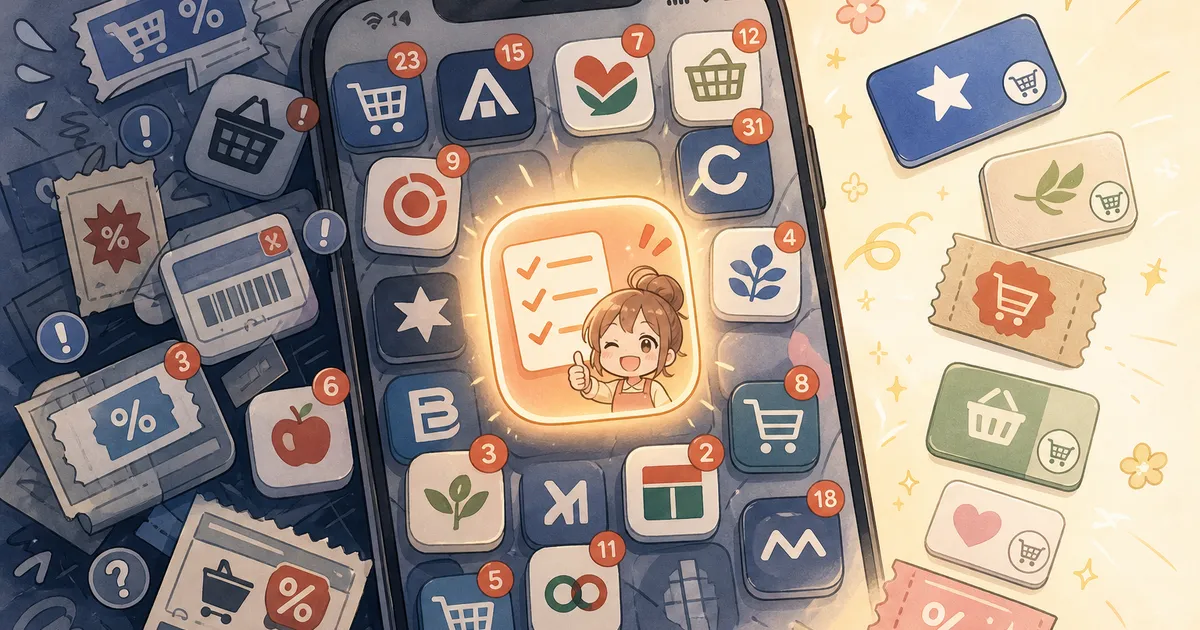
Every Grocery Store Wants Their Own App — You Only Need One
Open your phone. Scroll to page three. Count the grocery store apps.
There’s Kroger for the fuel points. Walmart for the pickup orders. Target’s app because you needed that one coupon six months ago. Fresh Thyme just redesigned theirs and sent three push notifications about it. And somewhere in a folder labeled “Shopping” there’s an Albertsons app you downloaded once and never opened again.
Five apps. Five logins. Five different interfaces. And not a single one of them can tell you what you actually need to buy this week.
The Grocery App Land Grab
Every grocery chain is fighting for real estate on your phone right now.
Fresh Thyme just overhauled its loyalty program in 2026, pushing customers harder toward app-based rewards. Kroger has been building its digital ecosystem for years. Walmart wants you ordering through their app exclusively. Target merges shopping, coupons, and payment into one app that does everything — sort of.
The pitch is always the same: download our app and save money. Digital coupons. Personalized deals. Loyalty points that expire if you don’t check in often enough.
But here’s what nobody talks about: all these apps are designed to keep you inside their store. Kroger’s app is useless at Target. Target’s app is useless at Trader Joe’s. And none of them are particularly good at the one thing you actually need — keeping a list of what to buy.
The Real Cost of App Fatigue
It’s not just the storage space on your phone. It’s the mental overhead.
Every store app wants you to create an account, set your preferred location, enable notifications, and connect a payment method. Then they want you to browse their weekly deals, clip digital coupons, and check your points balance before you shop.
That’s not a shopping list. That’s a part-time job.
And when you actually get to the store, you’re toggling between the store’s app (for deals), your notes app (for the list your partner texted you), and maybe a recipe app (for the ingredients you forgot to write down). Three apps to buy groceries. Four if you count the one asking you to rate your experience on the way out.
The average household shops at 2-3 different stores regularly. That’s 2-3 apps, each with their own login, their own interface, their own notification preferences. And if you switch stores — maybe one has better prices this month — you start over.
What If You Just Needed One?
A shopping list is not a loyalty program. It’s not a coupon clipper. It’s not a payment platform.
A shopping list is a list. And the best version of it works everywhere — regardless of which store you walk into.
That’s the idea behind ChibiCart. It’s not trying to replace your grocery store’s app. It’s trying to be the one app that’s actually useful no matter where you shop.
You open it. Your list is there. You check things off. You close it. Done.
No store loyalty integration. No coupon clipping. No AI trying to upsell you on organic alternatives. Just your list, on your phone, working whether you’re at Kroger or the farmers’ market or a gas station at 11 PM because you forgot milk.
Why Store-Independent Matters
Store apps are built on a premise: that you’ll do all your shopping in one place. But that’s not how most people actually shop.
You go to Costco for bulk items. The regular grocery store for produce. Maybe a specialty shop for that one thing. Sometimes you hit two stores in one trip because the pharmacy is in one and the deli is in the other.
A list app that works independently from any store fits how you actually shop, not how stores want you to shop.
Here’s what that looks like in practice:
Offline by default. ChibiCart is a PWA — a web app that installs on your phone and works without internet. Your list loads instantly, even in the concrete bunker of a Costco warehouse. No spinning wheels. No “check your connection” messages. It’s already there.
Real-time sharing without friction. Your partner adds “chicken thighs” from home. You see it in the store. No shared loyalty account needed. No “invite to household” flow. Just a list that stays in sync.
No account walls. You don’t need to create a profile, verify your email, or agree to marketing communications. Open, use, done.
Keeping the Apps That Earn It
This isn’t about deleting every store app on your phone. If Kroger’s fuel points genuinely save you money, keep it. If Target Circle has deals you actually use, great.
But your shopping list shouldn’t live inside any of those apps. Because the moment it does, you’re locked into one store’s ecosystem for the most basic part of grocery shopping — remembering what to buy.
Keep the loyalty apps for loyalty stuff. Use ChibiCart for the list. One app that crosses every store boundary, works offline, syncs with your household, and never asks you to clip a coupon.
Your Phone Doesn’t Need Another Grocery App
The next time a store asks you to download their app for 10% off your first order, you can go ahead and do it. Grab the discount. Then never open it again.
Your list — the thing you actually check fifty times during a shopping trip — deserves its own app. One that’s fast, simple, works everywhere, and doesn’t care which store’s parking lot you’re sitting in.
Five grocery store apps on your phone. But for the list itself? One is all you need. 🛒