Your Farmer's Market Doesn't Have Aisles — Your List Shouldn't Either
You walk into the Saturday farmer’s market with a list that says “tomatoes, basil, bread.” But the tomatoes aren’t ripe yet — it’s May. The bread vendor moved two stalls down and now sells sourdough pizza instead. And there’s a woman selling the most incredible rhubarb jam you’ve never planned for. 🍅
Your grocery store list works at the grocery store. At the farmer’s market, it falls apart in the first 30 seconds.
Why Does Your Grocery Store List Fail at the Farmer’s Market?
Grocery stores are designed around predictability. Fixed aisles, fixed stock, fixed prices. Your list mirrors that — aisle by aisle, item by item, check and move on.
A farmer’s market shopping list needs to work differently because markets operate on completely different rules:
- Stock changes weekly. What’s available depends on what’s in season right now — not what was there last Saturday.
- There are no aisles. Vendor placement shifts. New sellers appear. Regulars take weeks off.
- Discovery is the point. Half the joy is finding something you didn’t know you wanted.
- Quantities are imprecise. You buy “a bunch” or “a pint” — not 12 oz from a standardized package.
A rigid, item-by-item checklist fights against this. You end up frustrated that you can’t find exactly what you wrote, or you ignore the list entirely and overspend on impulse.
How to Build a Farmer’s Market Shopping List That Actually Works
The trick isn’t abandoning your list — it’s restructuring it for flexibility. A farmer’s market shopping list works best when organized by intention, not by specific items.
Here’s the 5-step method:
Step 1: List categories, not items. Instead of “tomatoes, cucumbers, lettuce,” write:
- 🥬 Greens / salad stuff (whatever looks fresh)
- 🍓 Fruit (1-2 types, whatever’s peak season)
- 🍞 Bread or baked goods
- 🧀 Protein / dairy
- 🌸 Wildcard (one unplanned discovery)
Step 2: Add anchor items only for things you specifically need. If you’re making a recipe that requires basil, write “basil” as a specific item under your greens category. Everything else stays flexible.
Step 3: Set a budget range, not item prices. Farmer’s market pricing varies by vendor and week. Set a total budget (“$40-50 for the market trip”) and track as you go.
Step 4: Walk the full market before buying. Don’t shop on your first pass. See what’s available, what’s peak, what surprised you. Then loop back and buy with intention. This single habit prevents both impulse regret and missed vendors.
Step 5: Leave room for discovery. That wildcard slot is intentional. Farmer’s markets reward curiosity — the fermented hot sauce, the heirloom garlic, the goat milk soap. Give yourself permission to grab one thing you didn’t plan for.
What’s Actually in Season at Farmer’s Markets Right Now?
If you’re shopping markets in May and June, here’s what you’ll actually find:
| Month | Peak Produce | Starting to Appear |
|---|---|---|
| May | Asparagus, radishes, spring onions, lettuce, peas, rhubarb, strawberries | Early tomatoes (greenhouse), herbs, new potatoes |
| June | Strawberries, cherries, zucchini, snap peas, beets | Blueberries, early corn, cucumbers, peaches |
Building your farmer’s market shopping list around what’s actually in season — instead of what you wish were available — eliminates 90% of the frustration. You’re not hunting for August tomatoes in May. You’re embracing what the land is producing right now.
The “Two-List” Method for Hybrid Shoppers
Most people don’t do all their shopping at the farmer’s market. The realistic pattern: hit the market for fresh produce, eggs, and bread — then the grocery store for pantry staples, cleaning supplies, and specific brands.
The two-list method keeps both trips efficient:
- Market list — flexible, category-based, discovery-friendly (use the format above)
- Store list — rigid, item-specific, aisle-optimized (your normal approach)
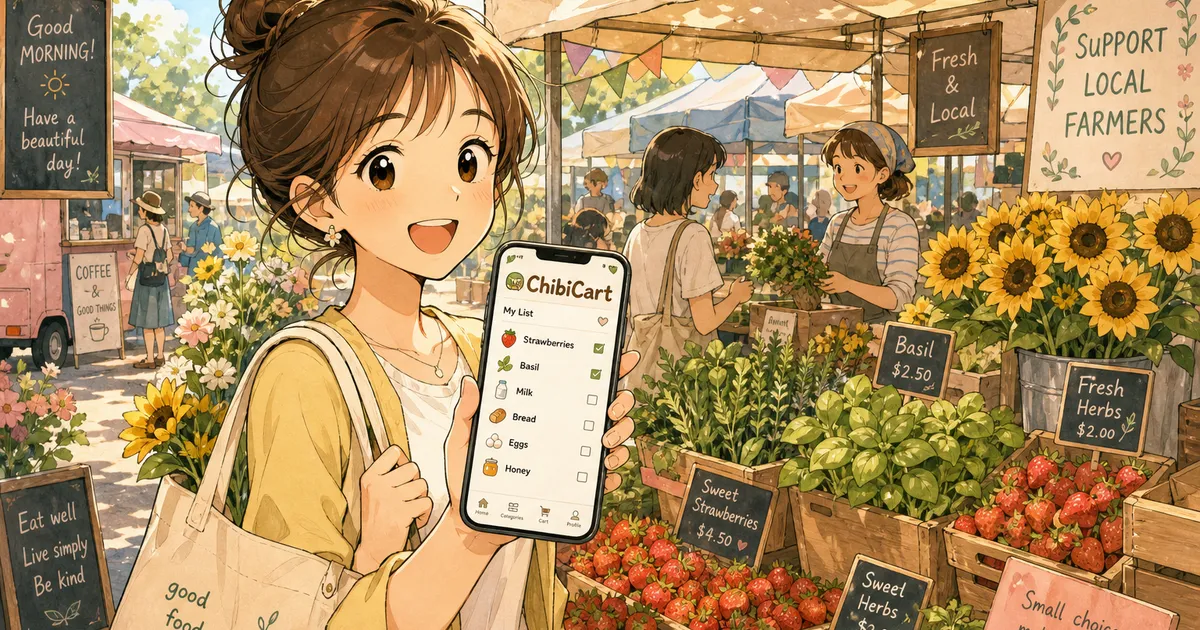
ChibiCart makes this natural because you can keep separate lists side by side — one for your Saturday market run, one for the Tuesday grocery trip. Both available offline, so it doesn’t matter whether the market is in a park with zero cell signal or a crowded parking lot. 📱
The app doesn’t force your items into grocery-store categories. Your list stays the way you wrote it — which is exactly what farmer’s market shopping needs.
How to Track Vendor Favorites Without Losing Them
One of the best parts of becoming a farmer’s market regular is building relationships with vendors. The honey lady on the south end. The sourdough baker who sells out by 10 AM. The flower farm that only comes every other week.
Keep a running note in your market list:
- “Arrive by 9:30 for Baker Dave’s sourdough”
- “South end: honey + beeswax candles”
- “Every other week: sunflower farm (next: May 17)”
These notes turn your farmer’s market shopping list into a living guide — not just a one-time checklist. When next Saturday rolls around, you already know where to go first and what to grab before it sells out.
You can build this in ChibiCart as a persistent list that you reuse and update each week — check off what you bought, add new discoveries, keep your vendor notes at the top. Voice input means you can add items hands-free when you’re carrying a bag of peaches in each hand. 🎤
Farmer’s Market vs. Grocery Store: A Quick Comparison
| Grocery Store | Farmer’s Market | |
|---|---|---|
| Layout | Fixed aisles, predictable | Changes weekly, vendor-dependent |
| List style | Specific items by category | Flexible needs with room to discover |
| Timing | Any time, any day | Limited hours, seasonal windows |
| Budget | Price-per-item planning | Range-based, cash-friendly |
| Shopping mode | Efficient extraction | Browsing, connecting, discovering |
Neither is better — they’re different modes. Your list should match the mode you’re in.
Your Market List Should Match the Market’s Energy
The farmer’s market isn’t a grocery store with different lighting. It’s slower, seasonal, social, and full of surprise. Your shopping list should match that — a gentle guide, not a rigid checklist.
Categories over items. Flexibility over rigidity. Discovery built in, not accidental.
Market season is opening up across the country right now. Build a list that works with the market instead of against it — and actually enjoy the Saturday morning ritual instead of stressing over items you can’t find. 🌻